Bed bug heat and residual eradication addresses insect colonies where over-the-counter chemical sprays repeatedly fail due to pyrethroid resistance. Convection heaters raise structural ambient temperatures between…
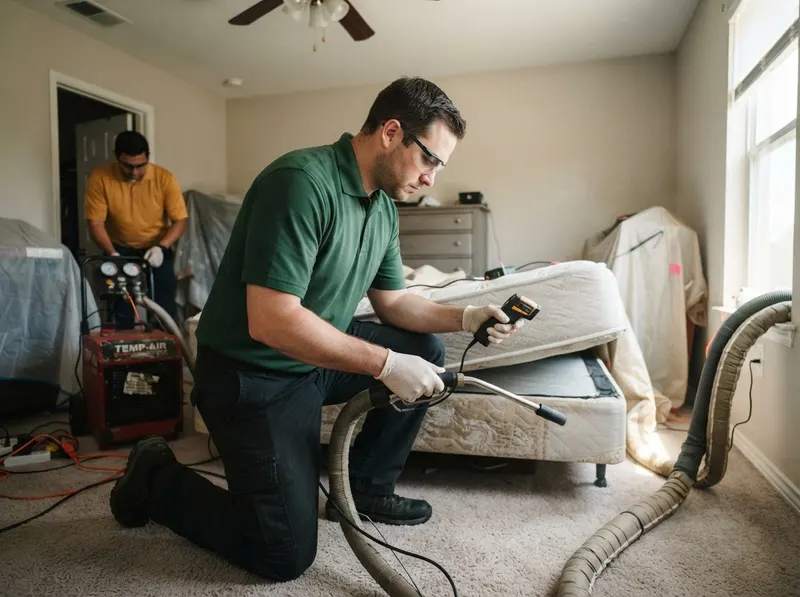
Bed bug heat and residual eradication addresses insect colonies where over-the-counter chemical sprays repeatedly fail due to pyrethroid resistance. Convection heaters raise structural ambient temperatures between 122°F and 135°F for at least 90 minutes, penetrating mattress seams, interior wall voids, baseboards, and hardwood floor joints to neutralize eggs, nymphs, and adults. Because thermal energy alone leaves no active protection once structures cool down, applying an agricultural-grade residual barrier along carpet tacks and wall outlets prevents stray bugs from re-establishing harborage. The minimum base rate for localized room remediation is $250, with full structural treatments calculated on square footage and clutter density.
Older architectural stock in Kessler Park, Bishop Arts District, and Oak Cliff often features pier-and-beam foundations and shiplap wall construction that create complex draft pathways, requiring precise thermal mapping to prevent thermal bleed. Mid-century ranch homes in Lake Highlands and Northwood Hills present extensive crawl spaces and original hardwood subflooring where unmonitored insects hide during daytime hours. In dense multi-story structures like Uptown lofts or multi-family properties near Lower Greenville, convective units must be balanced carefully to avoid triggering commercial fire suppression systems while ensuring thermal penetration through structural masonry.
1. Initial inspection: Technicians visually inspect mattress piping, headboards, electrical faceplates, and upholstered furniture to map insect density and establish containment perimeters.
2. Thermal heating phase: Electric or indirect-fired heaters elevate indoor temperatures to lethal thresholds above 122°F, continually verified by remote thermal sensors.
3. Residual application: Technicians apply non-repellent microencapsulated residuals and desiccant dust into baseboards, bed frames, and wall cavities to guard against re-infestation without mandatory long-term subscription contracts.
Every job gets a firm, written price after a free on-site visit.
Tell us about your bed bug heat & residual eradication job in Dallas and we'll send a clear, written quote, usually the same day.
 Green Tractor Pest Control