Pest Control Service in Dallas eliminates wood-destroying insects, indoor kitchen invaders, and attic rodents through targeted physical exclusions and agricultural-grade barrier applications. Properties across North Texas face severe biological pressures from blackland prairie clay shifts, seasonal moisture swings near the Trinity River basin, and extended heat waves that drive pests directly into living spaces.

Pest Control Service in Dallas is an on-site structural remediation and perimeter defense treatment that eliminates active insect and rodent infestations from residential and commercial properties.
Every service reflects the same meticulous attention to detail, whether it's a single job or a larger pest control service project across Dallas.
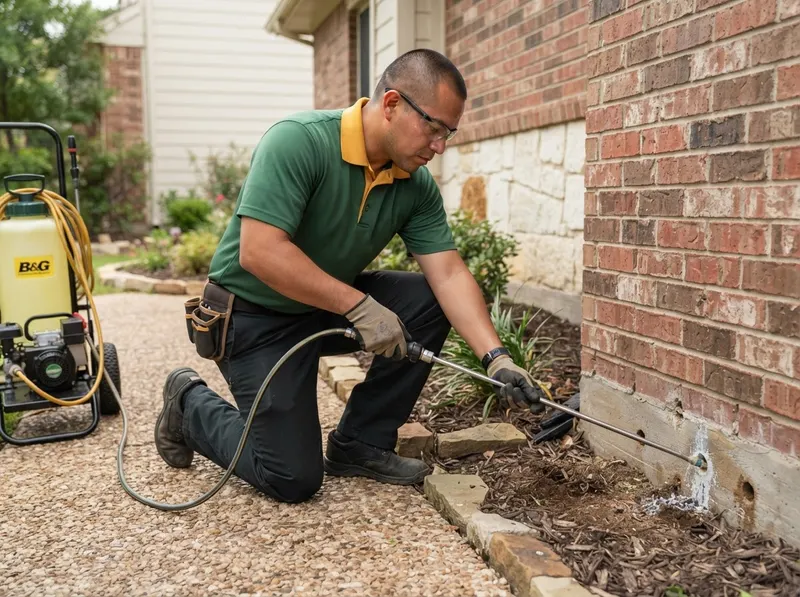
Soil-applied non-repellent liquid termiticides and localized sub-slab injections establish an unbroken protective chemical boundary around concrete slab and pier-and-beam foundations. This treatment halts Eastern subterranean termite mud tubes and prevents structural wood framing destruction, particularly during the humid spring swarming window that impacts North Texas from late February through early May. Technicians trench continuous 6-inch by 6-inch channels along exterior stem walls, rod-inject protective liquid down to the top of structural footings at 4 gallons per 10 linear feet, and core-drill abutting exterior flatwork such as porches, garages, and rear concrete patios. The non-repellent formulation allows foraging worker termites to pass through the treated zone undetected, transferring the active lethal compound back to the central subterranean colony through mutual grooming and food sharing, which systematically collapses the reproductive queen and reproductive caste within 60 to 90 days.
Get a quote →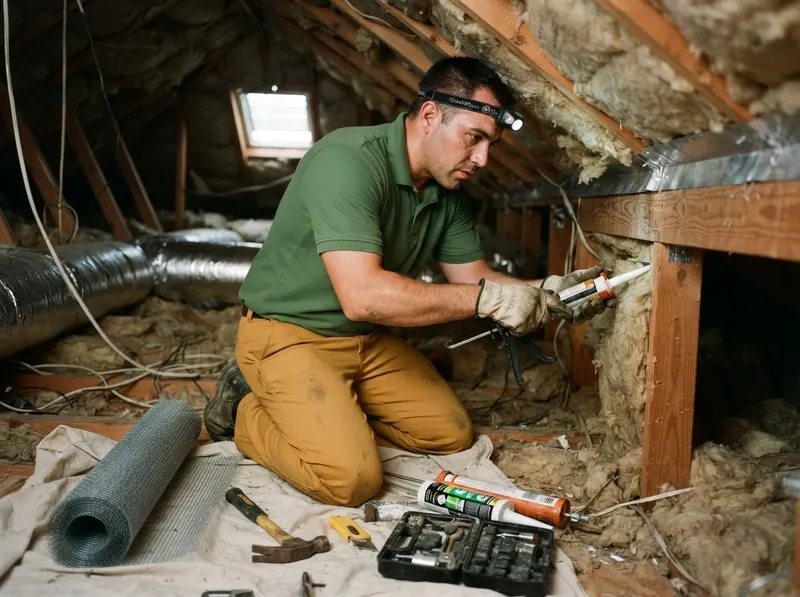
Complete mechanical sealing of structural roofline gaps, soffit penetrations, chimney flashing, and crawlspace foundation vents using heavy-gauge 1/4-inch galvanized hardware cloth and industrial non-expanding foam. Trapping programs strategically place snap traps along observed attic runs, joists, and wall voids to swiftly remove established roof rat and house mouse populations without using indoor rodenticides that cause decaying animal odor hazards inside finished wall cavities. Once the interior structure is verified zero-activity, technicians conduct localized attic sanitization, picking up biological droppings, extracting urine-contaminated blown cellulose or fiberglass batts, and applying agricultural-grade enzymatic atomized misting treatments that break down pheromone grease trails, neutralize airborne bio-pathogens, and prevent outdoor colonies from attempting reentry along common roof eaves.
Get a quote →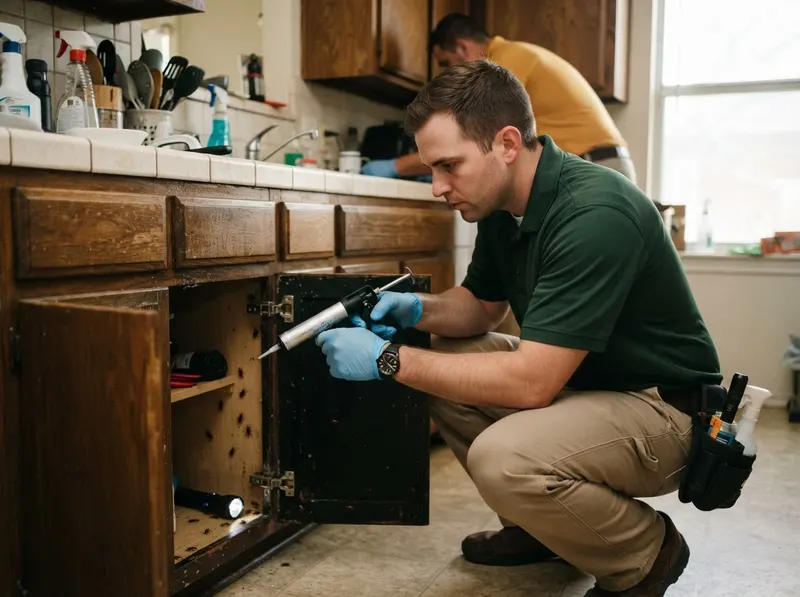
Targeted indoor eradication using low-toxicity insect growth regulators, precision abamectin or indoxacarb gel baits, and targeted crack-and-crevice applications behind refrigerators, dishwashers, garbage disposals, and kitchen cabinetry joins. This multi-phase protocol halts the reproductive egg cycle, preventing emerging nymphs from reaching reproductive maturity and shedding new ootheca capsules. HEPA-filtered vacuum extraction eliminates immediate aggregate clusters of active adults and shed exoskeletal allergens behind wall voids and baseboards. Follow-up monitoring checks target harborage micro-climates where elevated heat and plumbing condensation create ideal breeding conditions, achieving full kitchen and pantry clearance without applying broad, repellent chemical sprays over residential food preparation countertops or living areas.
Get a quote →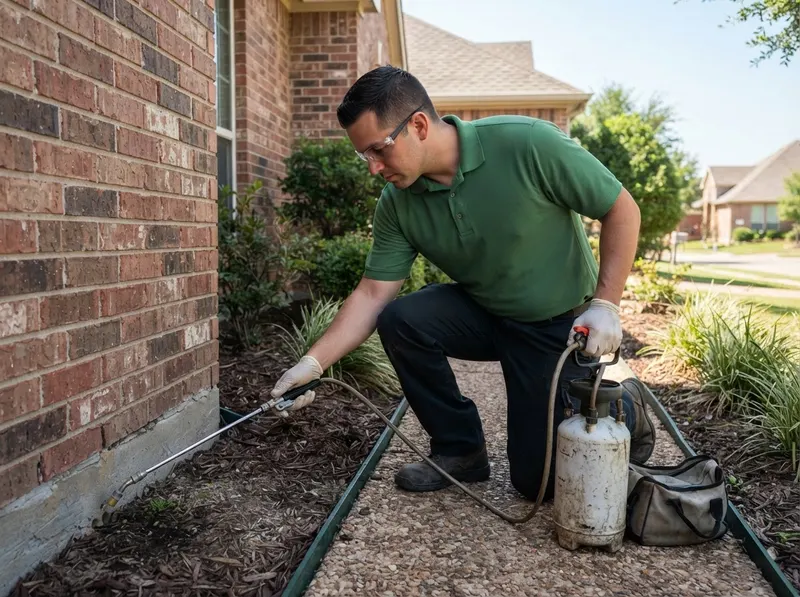
A heavy-duty protective perimeter band applied 3 feet upward onto the exterior masonry foundation and 6 feet outward across surrounding mulch, gravel, and turf borders. Micro-encapsulated synthetic pyrethroid compounds adhere securely to porous brick, mortar, stone, and split-faced concrete blocks, withstanding direct ultraviolet solar breakdown, 100-degree ambient afternoon heat, and heavy localized storm drainage. This exterior barrier intercepts crawling arthropods, including field crickets, striped bark scorpions, brown recluse spiders, silverfish, and American cockroaches, before they penetrate masonry weep holes, utility conduit entrances, or exterior door weatherstripping. Weep hole baffles and specialized dusting behind exterior brick veneers provide continuous secondary protection without interfering with necessary structural wall cavity ventilation.
Get a quote →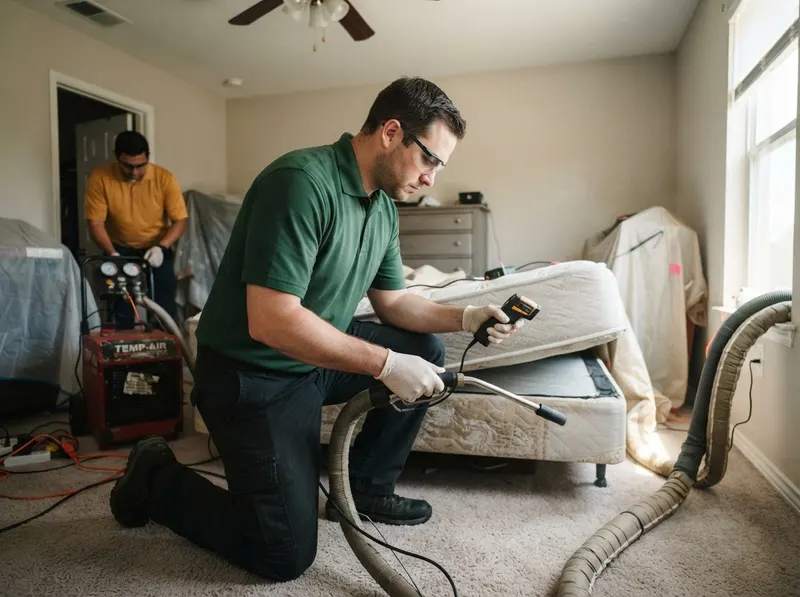
Comprehensive elimination protocols targeting infested mattresses, box springs, headboards, nightstands, and perimeter baseboard crevices across residential bedrooms and multi-family units. Systematic applications combine fast-acting contact knockdown agents with microscopic amorphous silica dust and long-lasting non-repellent residual compounds to eradicate all active developmental nymph stages and hidden reproductive harborages. Technicians disassemble framing joints, inspect interior electrical wall outlets, and treat carpet tack strips around room perimeters to stop migration into adjoining living areas. The protocol breaks insect pesticide resistance mechanisms, leaving a non-degrading physical barrier that desiccates emerging nymphs directly as they hatch from protected eggs over the subsequent 14 to 21-day incubation window.
Get a quote →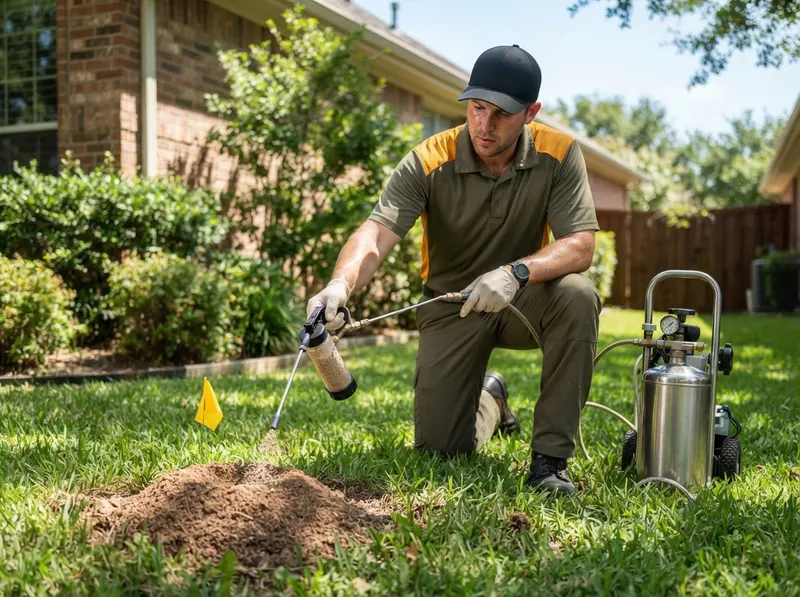
Broadcast application of specialized insect growth regulator granular baits across turf grass combined with localized direct-mound drenches using low-odor liquid concentrations. This dual-action protocol neutralizes aggressive red imported fire ant colonies and eliminates deep subterranean queen chambers nested beneath dense clay soil matrices. Foraging workers harvest the protein- and oil-based bait granules within 24 to 48 hours, carrying the active growth regulator directly into subterranean galleries where it sterilizes the laying queen and arrests larval development. Targeted deep drenches saturate active satellite mounds bordering sidewalks, landscape curbing, and HVAC condenser pads, eliminating surface stinging hazards for children and domestic pets while the broadcast bait maintains whole-yard suppression across the growing season.
Get a quote →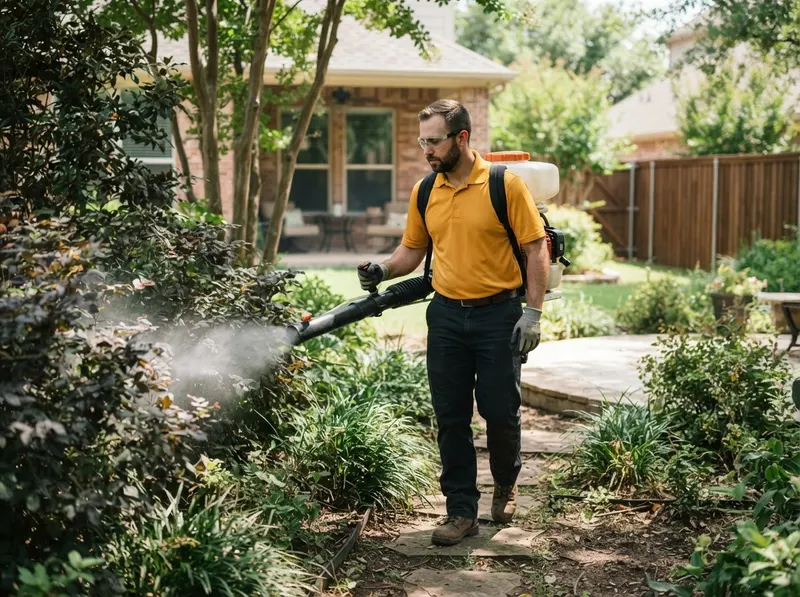
Directed fine-mist motorized backpack applications delivering micro-encapsulated adulticides and larvicides directly to the undersides of dense ornamental foliage, broadleaf shrubbery, shaded patio overhangs, and perimeter wooden fence lines. Technicians treat active resting harborage zones where adult mosquitoes seek shelter from daytime heat and wind currents. Solid mineral larvicide briquettes containing microbial Bacillus thuringiensis israelensis are placed directly into standing water catch basins, low landscape swales, french drains, and air conditioning condensation run-offs to eliminate aquatic larvae before they emerge as flying adults. This synchronized barrier suppresses local biting mosquito populations throughout the humid North Texas summer without contaminating open swimming pools or vegetable gardens.
Get a quote →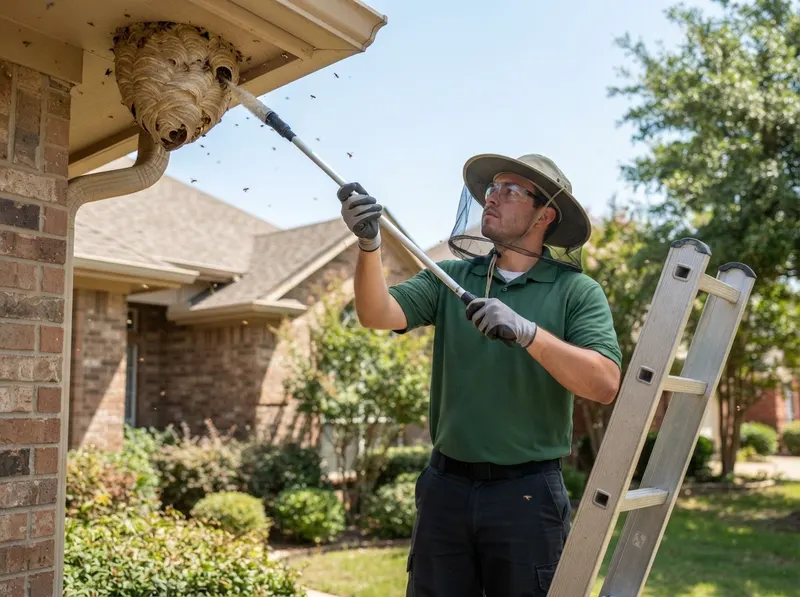
Physical removal and localized chemical knockdown of paper wasp, yellowjacket, baldfaced hornet, and mud dauber aerial nests located along roof eaves, second-story fascia boards, chimney crowns, and decorative patio pergolas. Technicians utilize telescoping applicator poles to project specialized freezing agents or pressurized residual insecticidal dust directly into nest entrances, neutralizing defensive workers instantly and preventing defensive swarm responses. Following nest detachment and mechanical scraping of adhesive mounting points, technicians apply a water-resistant residual repellent coating to the surrounding soffit and trim lumber, discouraging surviving satellite foundress queens from re-establishing duplicate colonies on the same architectural overhangs later in the season.
Get a quote →You get a firm, itemized quote for your pest control service before any work begins, no surprises, no pressure.
Careful prep, tidy work, and a full cleanup when we are done. We treat your home and belongings like our own.
The same trusted, background-checked team from the first call to the final check.
Selecting the proper remediation depends directly on pest biology, harborage location, structural architecture, and physical entry vectors across a property. If an interior space exhibits active German cockroach colonies nested behind kitchen cabinetry, within motor housings of dishwashers, or along bathroom plumbing lines, choose intensive interior micro-injection, vacuum extraction, and crack-and-crevice insect growth regulator protocols. If the primary threat involves outdoor nuisance populations like paper wasps nesting under roof eaves, red imported fire ants establishing foraging mounds across turf grass, or smokybrown and American cockroaches crawling through brick weep screeds, select exterior barrier defense and liquid foundation sprays.
The trade-off centers on treatment disruption versus perimeter longevity: interior remediation demands preparatory room clearing, pantry emptying, appliance pulling, and a mandatory 2 to 4-hour re-entry clearance window for children and domestic pets while chemical deposits cure, whereas exterior perimeter applications require zero interior disruption but must be mechanically renewed every 60 to 90 days to endure ultraviolet degradation, high summer surface temperatures, and heavy North Texas rainstorms. If dealing with structural invaders such as attic roof rats or Eastern subterranean termites, localized surface spraying alone is entirely ineffective; property owners must pair direct eradication with full 1/4-inch galvanized steel mesh exclusion carpentry along soffits and rooflines, or sub-slab perimeter soil trenching down to the concrete footing. The decision requires balancing upfront diagnostic and labor costs against the catastrophic risk of chewed electrical wiring, attic insulation fouling, and silent wood framing hollow-out.
When choosing between localized baiting stations and broad broadcast applications for lawn pests, baiting offers target-specific colony disruption with minimal active ingredient exposure across open areas, but demands a longer 10 to 21-day timeline for full queen neutralization, whereas liquid perimeter drenches yield immediate chemical knockdown at property edges but do not eradicate deep subterranean nest chambers located beyond the treatment perimeter.
Every project gets a firm, written price after a free on-site visit. Ranges below for orientation.
Tell us about your pest control service job and we'll send a clear, written quote, usually the same day. Or just call and talk to a real Dallas pro.
(945) 410-2472
Dallas properties sit directly atop deep, highly expansive Houston Black clay soils that shrink dramatically during blistering, drought-heavy summers and swell vigorously during sudden North Texas convective rainstorms. This violent seasonal ground movement creates ongoing structural foundation shifts, cracked brick veneer lintels, separated frieze boards, and fractured masonry weep screeds across Dallas County homes. These physical structural separations serve as direct, open-air biological highways for invasive roof rats, American cockroaches, and Eastern subterranean termites searching for indoor moisture reservoirs when surface soils desiccate under 100-degree summer heat. Older pier-and-beam properties sheltered beneath the dense, mature pecan canopy of Lakewood, Kessler Park, and Oak Cliff battle severe crawlspace humidity, damp wood rot, and moisture-loving carpenter ant satellite nests that thrive alongside subterranean termite colonies. Concurrently, slab-on-grade brick homes in Preston Hollow, Northwood Hills, and Lake Highlands feature low weep screeds positioned just inches above organic cedar mulch beds, offering field crickets, fire ants, and brown recluse spiders effortless ground-level entry behind sheetrock walls. Proximity to the Trinity River basin, White Rock Lake, and the sprawling wooded floodplains of the Trinity River Audubon Center generates massive continuous populations of biting floodwater mosquitoes and roof rats that routinely traverse overhanging oak branches onto asphalt shingle roofs. Effective property remediation in Dallas requires mechanical sealing materials and chemical barrier formulations capable of expanding, contracting, and resisting heavy ultraviolet breakdown across these persistent soil movements and micro-climate stresses.
Free estimates for Dallas & the surrounding area.
 Green Tractor Pest Control